Jute Bags & Heavy-Duty Sacking Bags
Hessian bags and heavy-duty twill sacking bags manufactured in Bangladesh for bulk food and agricultural logistics: coffee, cocoa, sugar, rice, grains, cashew nuts and vegetables. Built for loads from 25 kg to 100 kg, packed in compressed export bales.
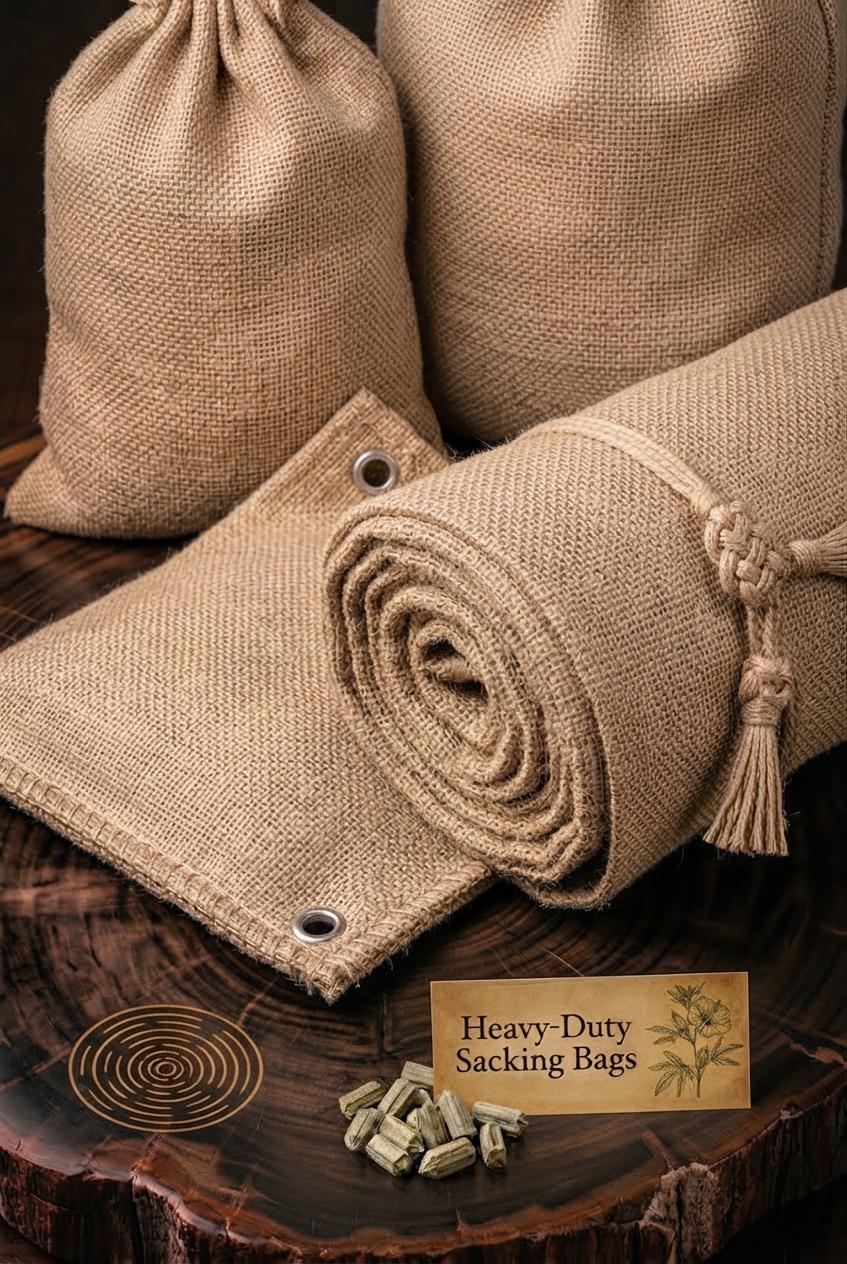
Hessian Bags & Heavy-Duty Sacking Bags
Stitched from high-quality Hessian and Sacking cloth, our Jute Bags provide sustainable, heavy-duty packaging solutions for global food and agricultural logistics. They are the global standard for packing coffee beans, cocoa beans, sugar, rice, grains, cashew nuts, and vegetables. The natural breathability of jute prevents internal sweating, keeping agricultural goods dry and mold-free throughout ocean freight transit.
Crop Protection
Breathable fabric protects sensitive commodities like cocoa and coffee against sweat damage.
Extreme Strength
Reinforced side seams and hemmed tops carry loads from 25 kg up to 100 kg without bursting.
Reusable & Recyclable
Offers multiple reuse cycles and complete biodegradable end-of-life disposal.
Available Subtypes & Specifications
- B-Twill & A-Twill Bags
- Standard 50 kg / 90 kg agricultural sacks (e.g., 44" x 26.5", 2.25 lbs).
- Food-Grade Cocoa / Coffee Bags
- VOT-treated, odorless sacks compliant with global cocoa trade requirements.
- Hessian Bags
- Lightweight sacks for nuts, potatoes, onion, and retail packaging.
- Custom Branded Bags
- Screen-printed with food-safe inks showing buyer branding, logos, and origin marks.
How It Is Sold & Shipping Specifications
- Packaging
- Packed in compressed export bales (e.g., 300 to 500 bags per bale) bound with steel straps.
- FCL Loading
- Approx. 35 to 45 bales per 20' FCL (approx. 18,000 to 22,000 bags depending on size/weight).
Typical applications
- 50 kg and 90 kg agricultural sacks
- Coffee and cocoa bean bags
- Sugar, rice and grain sacks
- Potato, onion and vegetable bags
- Custom-printed retail and branded bags
Frequently asked questions
What is the difference between Hessian Cloth and Sacking Cloth?
Hessian Cloth (Burlap): A plain-weave, lightweight fabric ranging from 7 oz to 14 oz per square yard. It is widely used for eco-bags, wrapping, geotextiles, and agricultural packaging. Sacking Cloth: A thick, heavy-density double-warp twill fabric (e.g., A-Twill, B-Twill, L-Twill). Sacking is designed to construct heavy-duty 50 kg to 90 kg agricultural sacks capable of enduring severe weight stress and rough handling.
Can MASK Associates custom-print logos and shipping marks on bags?
Yes. We offer custom high-definition screen printing. All branding, corporate logos, country-of-origin marks, and batch codes are printed using non-toxic, food-grade water-based inks that will not bleed or contaminate stored goods.
What container capacities (FCL) can buyers expect?
Raw Jute Bales: Approx. 12.5 MT per 20' FCL & 25 MT per 40' FCL. Jute Yarns (Spools/Trusses): Approx. 13 MT to 15 MT per 20' FCL; 24 MT to 26 MT per 40' HQ FCL. Jute Bags / Bales: Approx. 35 to 45 compressed bales (approx. 18,000 to 22,000 bags depending on bag weight) per 20' FCL.
How does jute compare to synthetic plastic (polypropylene) packaging?
Biodegradability: Jute degrades naturally into organic soil matter within months, whereas polypropylene (PP) plastic persists for centuries, breaking down into microplastics. Carbon Footprint: Jute cultivation is carbon-negative; one hectare of growing jute absorbs 15 tons of CO₂ in just 120 days. Plastic manufacturing is petroleum-derived and emission-heavy. Crop Protection: Jute's natural cellular weave allows stored agricultural commodities (like coffee and cocoa) to "breathe," preventing internal moisture condensation, sweat damage, and mold growth—a common problem with non-breathable plastic sacks.
You may also need
General Commercial & Buyer Terms
Port of Origin
Chittagong Port (Chattogram), Bangladesh.
Incoterms
FOB Chittagong, CFR, or CIF worldwide destinations.
Payment Terms
Irrevocable Letter of Credit (L/C at sight) or T/T incoterms.
Quality Verification
ISO 9001:2015 & ISO 14001:2015 certified.