Meshta Jute / Kenaf (Hibiscus cannabinus)
Coarse, resilient Meshta fibre with high resistance to moisture and rotting, exported in Bangla Meshta (BM) grades and often blended with Tossa or White jute for heavy sacking, marine ropes and composites.
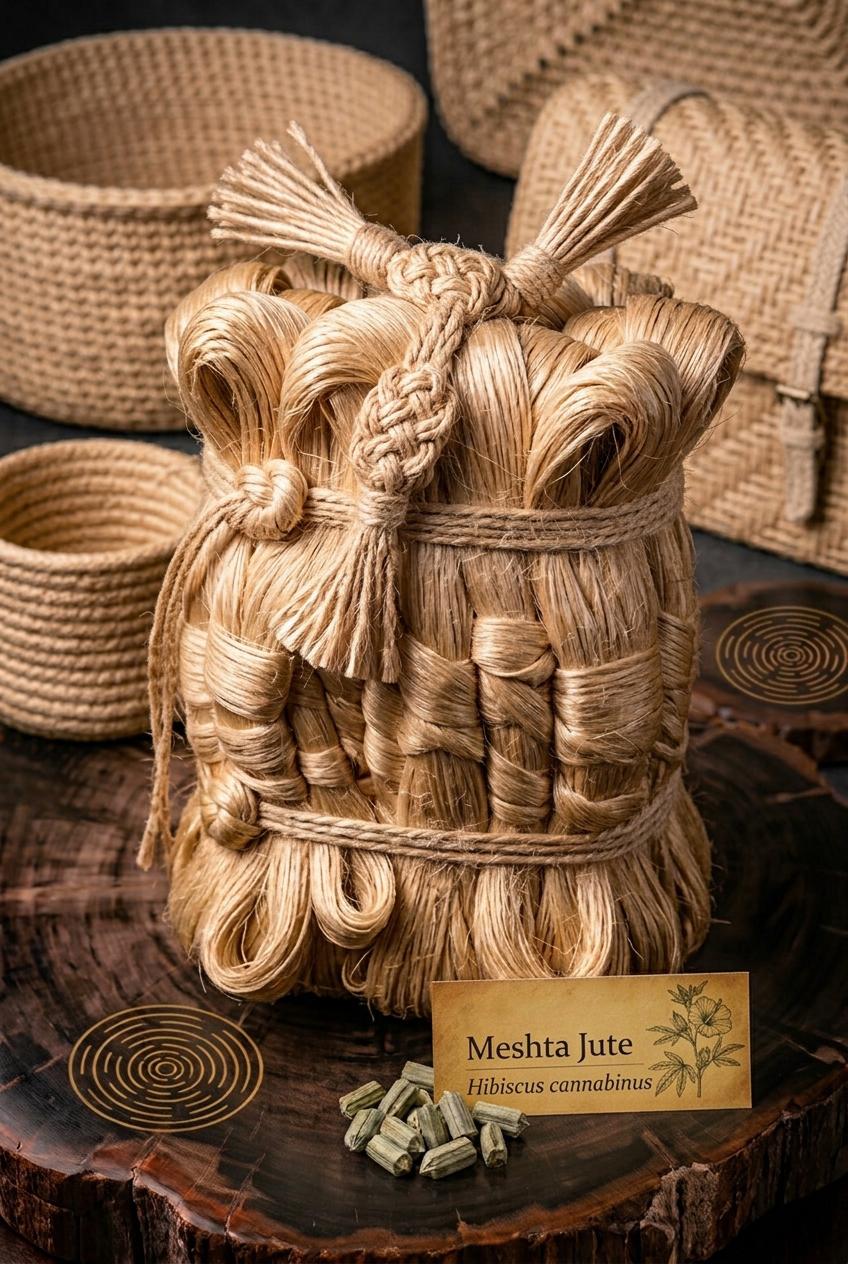
Meshta Jute (Hibiscus cannabinus)
Meshta Jute (also known as Kenaf) is a coarse, resilient natural bast fiber harvested from hardy, drought-tolerant plants. Meshta fibers are slightly stiffer and possess higher resistance to moisture and rotting than standard soft jutes. It is widely blended with Tossa or White jute to add structural body, thickness, and durability to heavy sacking fabrics, marine ropes, and industrial carpets.
High Moisture Resistance
Performs exceptionally well in outdoor and humid storage environments.
Cost-Effective Blending
Provides an economical alternative for heavy packaging and composite manufacturing.
Coarse Strength
Delivers high resistance to abrasions and tears under rough handling.
Available Subtypes & Specifications
- Export Grades
- BM (Bangla Meshta Raw) Standard, Medium, and Coarse grades.
- Form
- Pressed raw fiber bales.
How It Is Sold & Shipping Specifications
- Packaging
- Pressed bales wrapped for ocean shipment.
- Shipment Terms
- Per metric ton in 20' FCL or 40' FCL containers.
Typical applications
- Heavy sacking blends
- Marine ropes
- Industrial carpets
- Composite manufacturing
Frequently asked questions
What are the main commercial varieties of raw jute exported by MASK Associates?
MASK Associates exports three primary varieties of raw natural bast fiber: Tossa Jute (Corchorus olitorius): Golden-brown to reddish in hue with soft, silky, high-tensile fibers. It is the premier variety for fine spinning, yarn production, and premium burlap. White Jute (Corchorus capsularis): Light cream to off-white in color. It offers high natural stiffness and structural rigidity, making it ideal for standard sacking, twines, and paper pulp. Meshta Jute (Hibiscus cannabinus / Kenaf): Coarse, highly resilient fibers offering exceptional resistance to moisture and rotting. Meshta is frequently blended with Tossa or White jute to enhance structural durability in heavy sacking and marine ropes.
How are raw jute fiber grades classified under official Bangladeshi export standards?
Raw jute is classified using the official Bangla Jute Association (BJA) and BJMA export grading system: Grades: Bangla Tossa (BT) / Bangla White (BW) / Bangla Meshta Raw (BM) — Special, C, D, and E grades. Grading Criteria: Fiber length, tensile strength, color, natural luster, freedom from specks or roots, and fiber fineness.
What is the moisture content of exported raw jute bales, and why is it critical?
Standard commercial moisture content for export-pressed raw jute bales is strictly capped at 13% to 15% regain. Maintaining precise moisture levels prevents mold, biological degradation, and sweating inside maritime shipping containers, while avoiding dry-fiber brittleness during mechanical processing.
You may also need
General Commercial & Buyer Terms
Port of Origin
Chittagong Port (Chattogram), Bangladesh.
Incoterms
FOB Chittagong, CFR, or CIF worldwide destinations.
Payment Terms
Irrevocable Letter of Credit (L/C at sight) or T/T incoterms.
Quality Verification
ISO 9001:2015 & ISO 14001:2015 certified.